Hard Enamel vs Soft Enamel Pins: Differences, Durability, Cost and How to Choose
A practical comparison from a Wenzhou pin factory: how each finish is made, how it looks and feels, what it costs, and which one fits your project.
By the Minghui Crafts factory team · Updated
The short answer
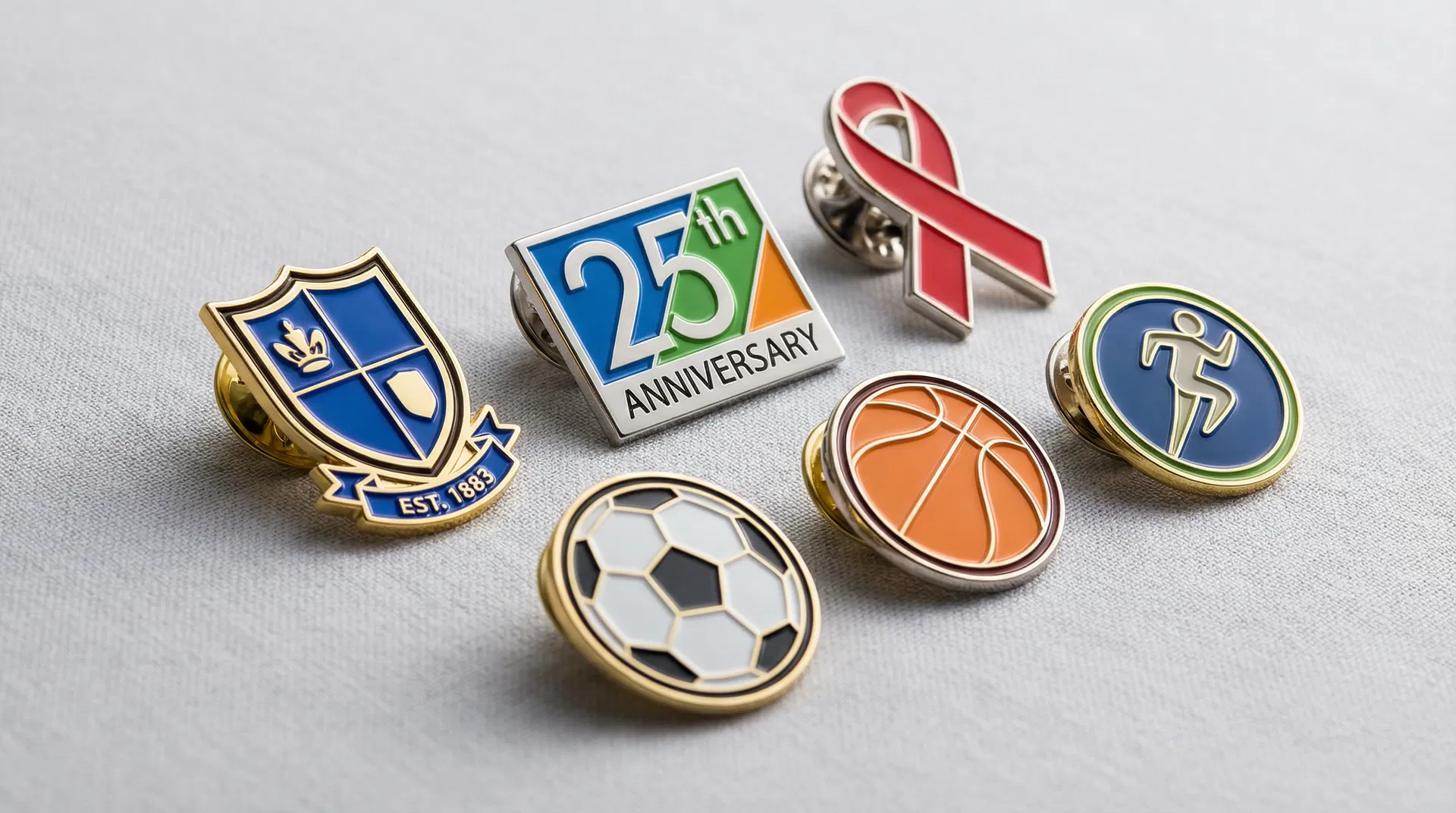
Soft enamel pins have color filled below the raised metal lines, so the surface has a textured, dimensional feel. They usually cost less and suit events, giveaways, team and club pins. Hard enamel pins are filled up to the metal lines and polished flat, giving a smooth, glossy, jewelry-like finish that resists wear. They usually cost more and suit corporate recognition, service awards, retail and collectible pins. Both have a standard MOQ of 50 pieces per design and color at Minghui, with smaller batches negotiable depending on the actual situation, and both can be checked as a physical sample before bulk production.
How each finish is made
Soft enamel
The pin is die-struck or die-cast with raised metal outlines, plated, and then each recessed area is filled with colored enamel by hand. The enamel is baked so it settles below the metal lines. Because the metal stays raised, you can feel the outline with a fingertip. An optional clear epoxy dome can be added on top to protect the colors and give a smooth, rounded surface.
Hard enamel
The recessed areas are filled slightly above the metal lines, baked, then ground and polished until the enamel and metal sit on one flat plane. The pin is plated after polishing. Most pins sold as “hard enamel” today use a synthetic (imitation) hard enamel that is polished the same way; traditional cloisonné, fired from glass powder, is a separate and more expensive process.
Side-by-side comparison
| Factor | Soft enamel | Hard enamel |
|---|---|---|
| Surface | Textured; color sits below raised metal lines | Smooth and flat; color level with the metal |
| Look | Bold, dimensional, casual | Polished, premium, jewelry-like |
| Durability | Good; an epoxy dome adds scratch protection | Very good; the polished surface resists wear |
| Fine detail | Handles small text and thin lines well | Good, but very thin lines may need simplifying for polishing |
| Plating looks | Works with bright, antique and dyed-black looks | Best with bright polished gold, silver, nickel or black nickel |
| Unit cost | Usually lower | Usually higher, because of the extra polishing step |
| Best for | Events, giveaways, schools, clubs, teams | Corporate recognition, service awards, retail, collectors |
Which one should you choose?
- Choose soft enamel if budget matters, the pins are for a one-day event or a large giveaway, the design has lots of small text, or you want an antique or textured look.
- Choose hard enamel if the pin is a reward people will keep and wear for years, such as service-anniversary or employee-recognition pins, or if it will be sold at retail where a premium finish matters.
- Choose soft enamel with epoxy if you want soft-enamel pricing with a smoother, more protected surface.
- Not sure? Send the artwork. We can recommend a finish from the design and intended use, and you can approve a physical sample before the bulk order.
Design tips for both finishes
Every color area needs a raised metal line around it, so very small gaps between colors are filled with metal rather than enamel. As a rule of thumb, keep metal lines and text strokes at around 0.3 mm or thicker so they stay crisp. Colors are matched to Pantone (PMS) references, so include PMS codes with your artwork if brand color accuracy is important. Common lapel pin sizes are 0.75 to 1.25 inches; very large hard enamel pins take longer to polish evenly.
Material matters too: zinc alloy is usually chosen for die-cast shapes with cut-outs or 3D relief, while iron and brass suit flatter die-struck designs. See our zinc alloy vs brass vs iron guide for details.
Ordering custom enamel pins from Minghui
- Standard MOQ 50 pieces per design and color; smaller batches negotiable depending on the actual situation. Many organization and event orders are 100 to 500 pieces.
- Quote response within 24 hours; after the mold fee is paid we send an approval proof for your review.
- A physical sample is normally made in about 7 days after you confirm the artwork proof. You pay the bulk deposit only after the sample is approved.
- Typical planning after approval: 10–15 days of production (15–20 days in peak season) and about 4–7 days of air shipping by UPS, FedEx or DHL. Shipping is quoted separately; DDP depends on the destination and order and is confirmed in the quote.
More detail: custom enamel pins, Custom badge MOQ: 50 pieces per design and color, smaller batches negotiable and approving a sample before the bulk deposit.
Frequently asked questions
Is hard enamel better than soft enamel?
Neither is better in every case. Hard enamel is smoother and more wear-resistant, so it suits pins worn for years. Soft enamel costs less, shows texture and fine detail well, and suits events and giveaways.
Why does hard enamel cost more?
After the enamel is baked, each pin is ground and polished flat before plating. That extra labor and the slightly higher material loss make the unit price higher than soft enamel.
Does soft enamel chip or fade?
With normal wear, soft enamel holds up well. Because the color sits slightly below the metal, the raised lines take most of the contact. An epoxy dome adds extra protection for pins that will be handled often.
Can I mix hard and soft enamel on one pin?
A single pin normally uses one finish. If you are unsure, order samples of the same design in both finishes and compare them before the bulk order.
What is the minimum order for custom enamel pins?
At Minghui, custom enamel pins have a standard MOQ of 50 pieces per design and color (smaller batches negotiable depending on the actual situation), for both hard and soft enamel.
Get a recommendation for your pin
Send your logo or sketch, the quantity and your in-hands date. We will suggest hard or soft enamel and reply with a quote within 24 hours.
Request a quote